
What is MERN Stack? – A Complete Beginner’s Guide
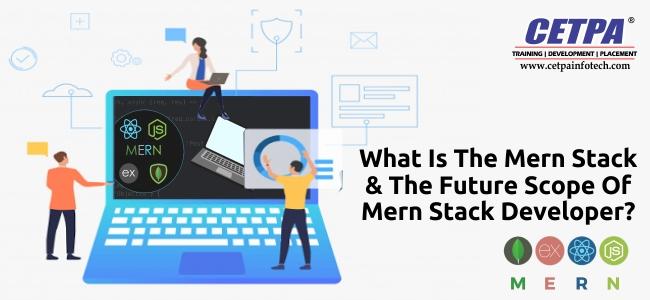
What is the MERN Stack?
Are you feeling stuck in your career because you only know frontend or backend skills? Are you struggling to land a job with limited tech skills? Are you tired of switching between programming languages for different tasks of a web app? The MERN stack course can help you become a full stack developer in 2025. It is one of the top full stack combinations recruiters demand today.
What is MERN Stack Developer?
A MERN stack developer is a full-stack web developer who specializes in building dynamic and scalable web applications using four key technologies: MongoDB, Express.js, React.js, and Node.js. These tools enable developers to build both the frontend and backend of a web application using JavaScript as the core programming language. Their ability to manage the entire development process plays a crucial role in creating web applications.
Why Is the MERN Stack In High Demand?
The efficiency of the MERN stack has made it extremely popular. There are valid reasons and excellent community support behind the increase in demand for a particular technology. For example, the MERN stack is one of the top choices for full-stack developers because of the following reasons:
Open Source
Every technology in the MERN stack is open source. It means there are no licensing fees involved. Developers can modify source code freely, resulting in faster prototyping, bug fixes, and customization.
Unified Language
One of the biggest advantages of the MERN stack is that it’s JavaScript-based from the frontend to the backend. This reduces the need to juggle multiple languages. Developers can focus on writing more maintainable code without switching contexts. It makes teams more productive
Quick And Efficient
MERN is ideal for developers looking to rapidly build and deploy dynamic web applications. Together, MERN technology provides a seamless workflow that is efficient for both small projects and web applications. The MERN stack developers are in high demand because of their unique expertise in comparison to frontend and backend developers.
Wide Community Support
Another reason for MERN’s popularity is its vibrant community. Developers can easily find solutions to problems because of the massive users of MERN Stack components: MongoDB, Express, React, and Node. Community support can be highly beneficial for beginners as they can easily seek help from the professionals.
Easy And Available
The vast library of reusable React components helps developers speed up the development process without reinventing the wheel. These prebuilt assets save time and maintain consistency across large-scale projects.
What are the MERN Stack Components?
The MERN stack is a collection of four open-source technologies that work together to simplify full stack web development. Each component of the stack plays a unique role in building responsive web applications using just one programming language.
MongoDB: The Database Powerhouse
MongoDB is a NoSQL, document-based database where data is stored in JSON-like documents rather than traditional rows and columns. This nature of MongoDB makes it perfect for modern applications that need to adapt quickly as business requirements change. It allows developers to store and manage data efficiently without worrying about a rigid database structure.
Express.js: The Server-Side Framework
Express.js is a lightweight and minimalist web application framework for Node.js. It streamlines backend development by offering tools and features to manage routes. It handles HTTPS requests and also builds APIs. It simplifies writing backend logic and integrates with MongoDB and frontend frameworks.
React: The Front-End Library
React.js is a JavaScript library by Facebook that’s used for building user interfaces. React allows developers to build encapsulated components that manage their own state. It makes UI development more predictable and efficient.
Node.js: The Runtime Environment
Node.js is a backend JavaScript runtime built on Chrome’s V8 engine. It enables JavaScript to be used for building backend services like APIs and real-time applications. It is a non-blocking and event-driven. That makes it an ideal choice for real-time applications.
MERN Stack vs MEAN Stack vs Full Stack
If you’re exploring web development, you’ve likely heard terms like MERN stack, MEAN stack, and Full Stack. While they often overlap, each has its own unique structure. Understanding the difference between them can help you choose the right path based on your career goals and project needs.
MERN stands for MongoDB, Express.js, React.js, and Node.js. It is a popular tech stack that allows developers to build full stack applications entirely using JavaScript. React’s component-based architecture makes UI development flexible and efficient. It is great for single-page applications (SPAs) and real-time user interfaces.
MEAN stands for MongoDB, Express.js, Angular, and Node.js. It is also JavaScript-based but replaces React with Angular for the frontend. Angular provides a more opinionated framework. It is excellent for building enterprise-grade applications with a clear architecture.
Full Stack refers to a developer’s ability to work on both frontend and backend technologies. A full stack developer might work with React, Angular, Node.js, Python with Django, MySQL, and PostgreSQL.
Your decision should depend on the technologies you enjoy working with, your long-term goals, and the kinds of projects or companies you’re aiming for. Regardless of the stack, strong problem-solving skills and foundational programming knowledge are what truly set great developers apart.
What are the Career Opportunities After Completing MERN Stack Training?
Completing a MERN Stack Developer course can open the door to a wide range of exciting and high-demand career paths in the tech industry.
MERN Stack Developer
This is the most direct career path. MERN stack developers are full-stack professionals capable of working on both the front-end and back-end of web applications. They’re expected to build, test, and deploy dynamic websites or applications using MongoDB, Express.js, React, and Node.js. Key responsibilities are:
- Developing responsive front-end interfaces using React
- Managing databases using MongoDB
- Creating robust APIs and backend logic with Node.js and Express
- Deploying applications on cloud platforms
Frontend Developer
If your strength lies in UI/UX design and interactive user interfaces, specializing as a React.js frontend developer is a great path. Companies seek developers who can build responsive user interfaces using React. Key responsibilities:
- Designing and implementing UI components
- Optimizing performance
- Working closely with UX designers and backend developers
Backend Developer
Some MERN stack learners choose to specialize in the backend. These roles focus on building APIs, handling databases, and ensuring data security. Key responsibilities:
- Designing RESTful APIs
- Implementing authentication and authorization
- Managing databases and server-side logic
Full Stack Web Developer
For those who want to wear multiple hats, full-stack roles are in high demand. Employers highly value these developers for their versatility. Industries hiring full stack developers are e-commerce, edtech, fintech, healthtech, and SaaS platforms.
Technical Support & Product Engineer Roles
Tech companies hire MERN developers for hybrid roles like technical support engineers or product engineers who understand the product’s full-stack architecture and can assist in debugging or improving user experience.
Junior Software Developer
If you’re a fresher with a non-technical background, many companies offer entry-level positions where you can learn and grow within real-time projects under mentorship.
Conclusion
The MERN stack provides you with a strong technical foundation and makes you highly employable in today’s competitive job market. The skills you acquire through a MERN stack developer course are aligned with the current industry demands and future tech trends. More companies are adopting it due to its speed and cost-efficiency. It is a go-to stack for modern web applications.

You may also like
How To Become a MERN Stack Developer Step-by-Step Guide

MERN Stack Course Syllabus For Beginners and Advanced
